


The Role of Content Clusters in Modern Seo
Last Updated on September 6, 2025 by Jim C.
Content clusters are vital for modern SEO strategies. They organize information effectively.
In today’s digital landscape, search engines prioritize well-structured content. Content clusters help achieve this by grouping related topics together. This approach not only makes your website more navigable but also enhances its authority on specific subjects. Readers find it easier to explore connected information, improving user experience.
Moreover, search engines reward such structured content with better rankings. Understanding the role of content clusters can transform your SEO strategy. It’s about creating a network of related articles that support each other. This method can lead to higher visibility and more traffic. Dive in to learn how content clusters can elevate your SEO game in the competitive online world.

Credit: inboundjunction.com
Introduction To Content Clusters
Content clusters are crucial in modern SEO. They help organize and improve website content. In this section, we will explore the basics and importance of content clusters.
Definition And Basics
Content clusters consist of a main topic and several subtopics. The main topic is called the pillar page. Subtopics are linked to this pillar page. Each subtopic is a detailed article. These articles link back to the pillar page. This structure helps search engines understand your content better.
Importance In Seo
Content clusters improve site organization. They make it easier for users to find information. This improves user experience. Search engines reward well-organized content. It helps in ranking higher in search results. Good content clusters show your expertise. They build authority in your field. This can attract more visitors to your site.
Creating Effective Content Clusters
Content clusters are key in modern SEO strategies. They improve site structure and boost rankings. Creating effective content clusters involves several steps. This section will explore these steps in detail.
Identifying Core Topics
Begin by identifying core topics relevant to your audience. These topics should align with your business goals. Core topics are broad themes that represent your brand. They serve as the foundation for your content clusters.
Use keyword research to find popular topics. Tools like Google Keyword Planner can help. Look for topics with high search volume. Consider the relevance and competition for each keyword. Choose topics that balance popularity and feasibility.
Developing Supporting Content
Once core topics are identified, develop supporting content. Supporting content dives deeper into subtopics. Each piece of content should link back to the core topic. This creates a network of related articles.
Write detailed articles on subtopics. Ensure each article is informative and valuable. Use clear headings and subheadings. Include relevant keywords naturally. Avoid keyword stuffing. Quality content keeps readers engaged.
Link supporting content to the core topic page. This helps search engines understand the relationship between pages. It improves crawlability and boosts SEO. Internal linking is crucial in content clusters.
Benefits Of Content Clusters
Content clusters have become pivotal in modern SEO strategies. They offer multiple benefits that can significantly enhance a website’s performance. Content clusters help organize information around central themes. This makes it easier for search engines and users to find relevant content.
Enhanced Keyword Rankings
Content clusters improve keyword rankings. They do this by structuring content around primary and related keywords. This creates a network of interlinked articles. Search engines recognize this structure and reward it. Higher keyword rankings lead to more organic traffic. This boosts visibility and reach.
Improved User Experience
Content clusters enhance user experience. They provide a clear path for users to follow. Visitors find relevant information quickly. This reduces bounce rates. A positive user experience encourages longer site visits. This can lead to higher conversion rates. Well-organized content makes navigation simple. Users appreciate this ease of access.
Implementing Content Clusters
Content clusters are a modern SEO strategy that can significantly boost your website’s visibility and relevance. Implementing content clusters involves organizing your content around central topics and related subtopics. This approach helps search engines understand the context of your content, making it easier for users to find the information they need.
Tools And Platforms
There are several tools and platforms that can help you implement content clusters effectively. Tools like SEMrush and Ahrefs offer keyword research capabilities that identify primary topics and related subtopics. These tools also provide insights into your competitors’ content strategies.
Content management systems (CMS) like WordPress and HubSpot have built-in features that facilitate content clustering. They allow you to categorize and tag content, creating a structured and user-friendly website. Visual sitemaps and internal linking features are also useful for organizing your content clusters.
Best Practices
To get the most out of content clusters, follow these best practices:
- Start with a Pillar Page: Create a comprehensive, long-form piece of content that covers a central topic in-depth. This will serve as the foundation for your cluster.
- Develop Cluster Content: Write multiple pieces of related content that link back to your pillar page. These should cover subtopics in detail.
- Use Internal Links: Ensure that all cluster content links back to the pillar page and to other cluster content. This creates a web of interconnected pages that enhances SEO.
- Update Regularly: Keep your content up-to-date to maintain its relevance and effectiveness. Regular updates signal to search engines that your content is current.
Have you ever wondered why some websites always appear at the top of search results? Implementing content clusters could be the secret sauce. Try these tips and tools, and see how they can transform your SEO strategy.
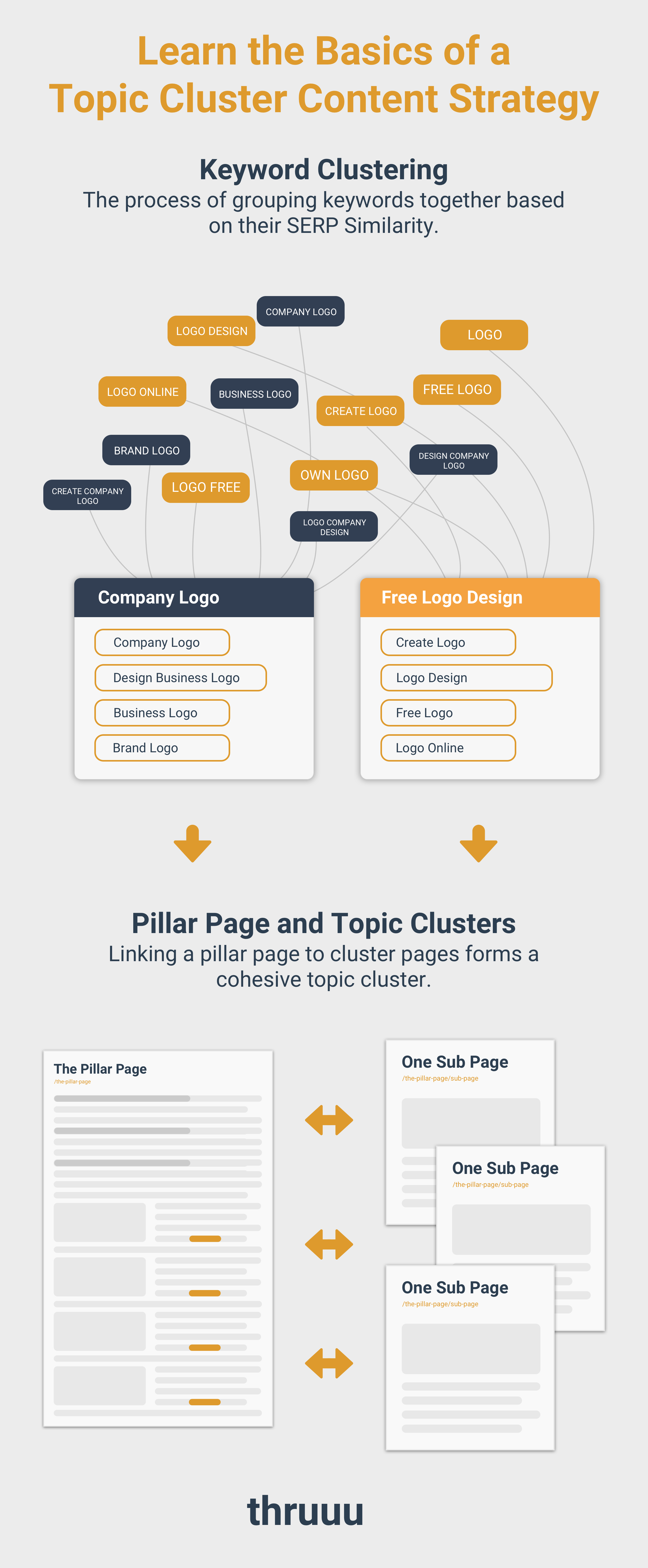
Credit: thruuu.com
Conclusion
Content clusters play a crucial role in modern SEO. They organize information efficiently. This helps users find what they need quickly. Search engines love this structure too. It improves website ranking. Better ranking means more visitors. More visitors lead to higher engagement.
Engaging content builds trust with the audience. Trust turns visitors into customers. So, create content clusters. Boost your SEO efforts. See your website thrive.
About the Author Jim C.
Jim C. Clark is the lead tech blogger at TechnoHacks.net, where he delivers insightful content across a wide range of digital topics. With a keen interest in emerging technology and practical tools, Jim writes in-depth articles on AI, Python, software, and the latest apps. He also shares expert advice on freelancing, digital marketing, SEO, and business growth strategies. Known for his clear, engaging writing style, Jim breaks down complex concepts into actionable insights. Whether he's recommending the best free tools 🧰 or explaining “how to” guides, Jim’s goal is to empower readers with the knowledge they need to thrive in the digital world.