
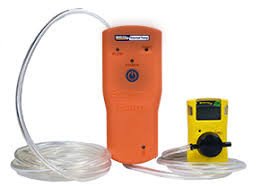
Gas Clip Technologies Universal Remote Sampling Pump
Last Updated on October 3, 2026 by Jim C.
The gas clip technologies universal remote sampling pump attaches to your portable gas detector to pull air samples from confined spaces before you enter them. This device allows you to test for hazardous atmospheres safely from a distance by drawing air through a tube into the sensor.
Universal Remote Sampling Pump Parts
Photo: www.buygasmonitors.com on Google
| Item | How much | Why it’s needed | A substitute |
|---|---|---|---|
| Sampling Pump | One unit | Moves air to sensor | None — don’t swap |
| Tubing | Three feet | Reaches remote zones | None — don’t swap |
| Filter | One piece | Blocks dust and water | None — don’t swap |
| Battery | One charge | Powers the motor | None — don’t swap |
| Adapter | One piece | Secures pump to unit | None — don’t swap |
Preparing for Remote Sampling
- Check that your gas detector is calibrated and turned on.
- Inspect the tubing for any cracks or sharp bends.
- Ensure the moisture filter is clean and properly attached.
- Verify the battery level is sufficient for the duration of the task.
- Always test the pump’s seal by blocking the intake end.
If the pump fails to pull air, you must stop immediately. Using a damaged unit can lead to false gas readings, which puts your life at risk.
Operating the Sampling Device
- Connect the pump adapter firmly to the inlet of your portable gas detector.
- Attach the three-foot sampling hose to the nozzle on the pump’s intake side.
- Power on the pump by pressing the main button for two full seconds.
- Observe the pump light; a steady green indicates the motor is running correctly.
- Insert the open end of the tubing into the target confined space area.
- Wait for the gas detector to show a stable reading for at least ten seconds.
- If the alarm sounds, immediately withdraw the tubing and evacuate the surrounding area.
- Power down the pump after finishing your test to preserve the battery life.
- Detach the pump and store it in a clean, dry carrying case.
Verifying Successful Operation
You’ll know the setup works when the gas detector display shows a change in values within seconds of placing the tubing in a known area. If you’re testing in a clean room and then move the tube to a source of gas, the reading should rise steadily. If the detector shows “Flow Fault” or stays at zero while you’re near a gas source, the seal is likely loose.
Troubleshooting Common Issues
| What happened | Why | What to do |
|---|---|---|
| Flow fault alarm | Blocked tubing | Clear debris from hose |
| No reading change | Loose connection | Tighten the adapter |
| Pump won’t start | Dead battery | Charge according to manufacturer instructions. |
| Erratic readings | Wet filter | Replace the filter element |
Frequency of Use
Use this equipment every single time you need to verify air quality before entering a confined space. You should perform a bump test on the detector before every shift. The frequency changes based on the environment; if you work in dusty areas, you must replace the filter more often than if you work in clean, indoor settings. Always follow your site’s specific safety protocols regarding gas testing intervals.
Frequently asked questions
Photo: www.grainger.com on Google
Can I use this pump with any gas detector?
No, this unit is designed specifically for compatible Gas Clip Technologies devices. Always check the manufacturer’s compatibility list on the official website to ensure your specific detector model supports the pump attachment before you attempt to connect it.
How long does the battery last?
The battery lasts for about 10 hours of continuous use on a full charge. This varies by model and temperature; if you’re working in freezing conditions, expect the battery life to drop by about 20 percent.
Is it safe to use in explosive environments?
Yes, the unit is built to be intrinsically safe for use in hazardous locations. You must verify the specific Class and Division ratings on the label of your pump to ensure it meets the safety requirements for your job site.
What happens if the tubing gets wet?
The internal filter will likely become clogged and stop the airflow. You must replace the filter immediately if it gets wet, as a saturated filter will prevent accurate gas samples from reaching the sensor of your detector.
How often should I replace the intake filter?
Replace the filter regularly or sooner if it looks dirty. If you notice the pump struggling to draw air or if you see a flow alarm, the filter is the first part you should check and replace.
Does it matter which way the tubing is connected?
The tubing must be connected to the intake side of the pump to pull air toward the detector. Connecting it backward blows air away from the sensor, resulting in zero readings regardless of actual gas levels.
Gas clip, in short
Keeping your team safe doesn’t have to be complicated. Once you’ve finished your testing, make sure to inspect the tubing for any signs of wear or blockage. You’ll want to store the unit in a clean, dry place so it’s always ready whenever you’re heading out to a new job site.
Related guides
